March 24, 2026

Managing Partner

Home and hygiene companies face eight powerful forces that impact their ability to grow. As the landscape shifts, understanding how these dynamics connect to competitive strategy and organizational capabilities is critical. Success over the next decade will depend on how well they master each force.
The home and hygiene market's easy-growth years are over, and companies still managing by the old playbook are falling behind. What follows is not a forecast. It is a description of forces already in motion, most of which are accelerating, several of which are converging, and none of which will wait for the next planning cycle.
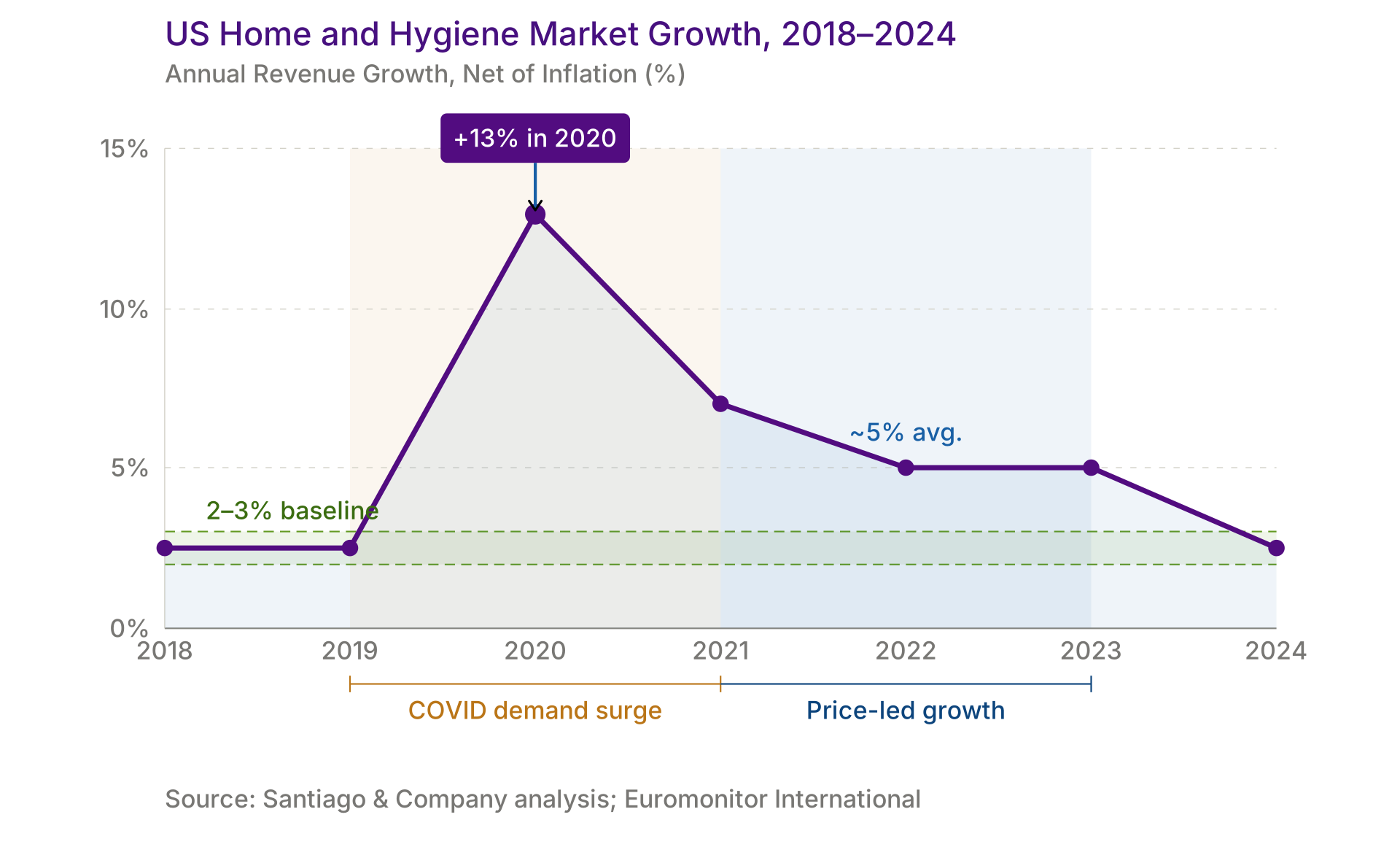
The home and hygiene sector has lost its tailwinds. For a few years, the COVID-19 pandemic gave brands a big boost: consumers bought cleaning products, sanitizers, and staples at rates the industry had never seen. US home and hygiene sales surged about 13 percent in 2020. This was followed by another growth period, but this time driven by price. Manufacturers raised list prices to offset volume declines and higher input costs. The result was about 5% annual growth, net of inflation.
That era is over. Inflation has receded. Volume growth remains fragile. The sector is settling back to its pre-pandemic baseline of 2 to 3 percent annual growth. The environment has changed. Now, companies must decide how to respond.
At Santiago & Company, we surveyed major US retail merchants, interviewed industry leaders, and analyzed consumer spending patterns. Eight forces emerged from this work. These forces will decide which home and hygiene players grow and which stall. Companies that understand and act on all eight with urgency will drive the next value creation in this sector. Those relying on the old playbook will fall behind.
Previously, consumer goods companies could deliver modest volume growth and margin expansion to please investors, but now, with each of the eight sector forces making growth more challenging, they must deliver stronger growth to please investors. Capital markets react sharply to how companies respond to these forces, rewarding those who can find new ways to grow and penalizing those who cannot.
The valuation gap between high- and low-growth home and hygiene players is the widest in six years. The enterprise-value-to-EBITDA spread between these groups has nearly doubled from 30 percent in 2019. Investors are not rewarding cost-cutting or financial discipline. They are rewarding real top-line growth.
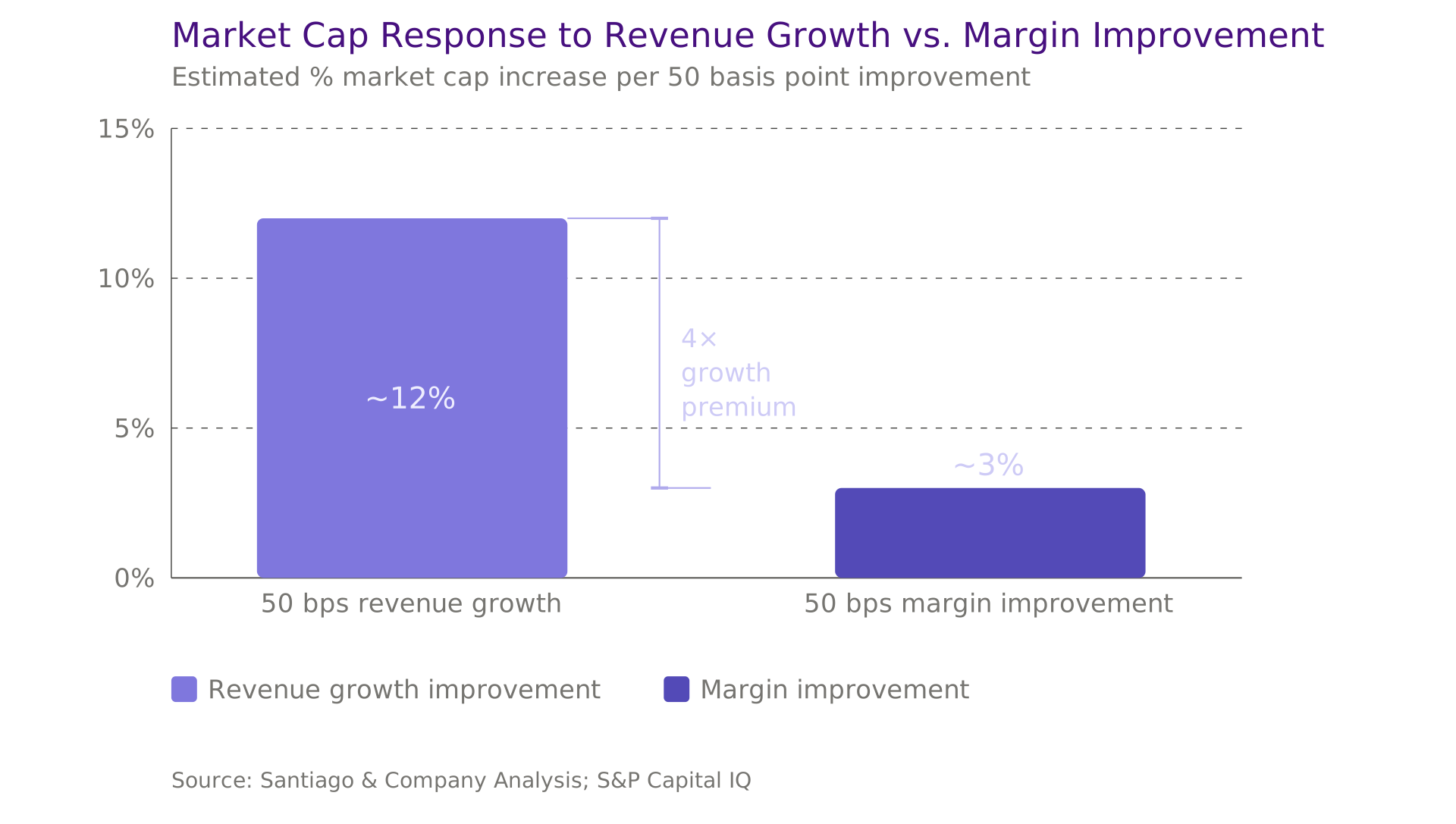
The math is clear. Our analysis found that a 50-basis-point rise in top-line growth expectations drives a roughly 12 percent increase in market cap. An equal profit improvement moves the needle only about 3 percent.
Companies see the same data. Portfolio-shaping has intensified across the sector. Acquisitions of high-growth adjacencies and divestitures of slow-growth segments are on the rise. Strategic bets focus on categories with better prospects. When Advent International acquired most of Reckitt's Essential Home portfolio, or when Kimberly-Clark and others made similar moves, the reason was the same: reposition toward growth, not inertia.
For home and hygiene companies, growth is essential. The market demands it, and the reward is clear.
The second force is reshaping brand competition at every level.
While established brands still lead in home and hygiene product sales, changing industry forces are making it harder for them to keep up with private brands and challengers. Winning market share now depends on reacting to the competitive impacts of these forces.
Established brands produced less than half of the total category growth in recent years. The rest went to two groups, private brands and insurgent challengers, that are reshaping the competitive landscape.
Private brands have become a genuine force across the sector. Total US private label sales reached a record $271 billion in 2024, up 3.9 percent year on year, with home care among the top-performing departments for unit growth. Within home and hygiene specifically, private-brand sales exceeded $22 billion in 2024. They have gained the most ground in commoditized categories, such as paper towels, tissue, and certain cleaning consumables, where differentiation is low, and value propositions are easy to compare. But that pattern is spreading. As consumers grow more comfortable purchasing private-label products in one category, they become more willing to try them in others.
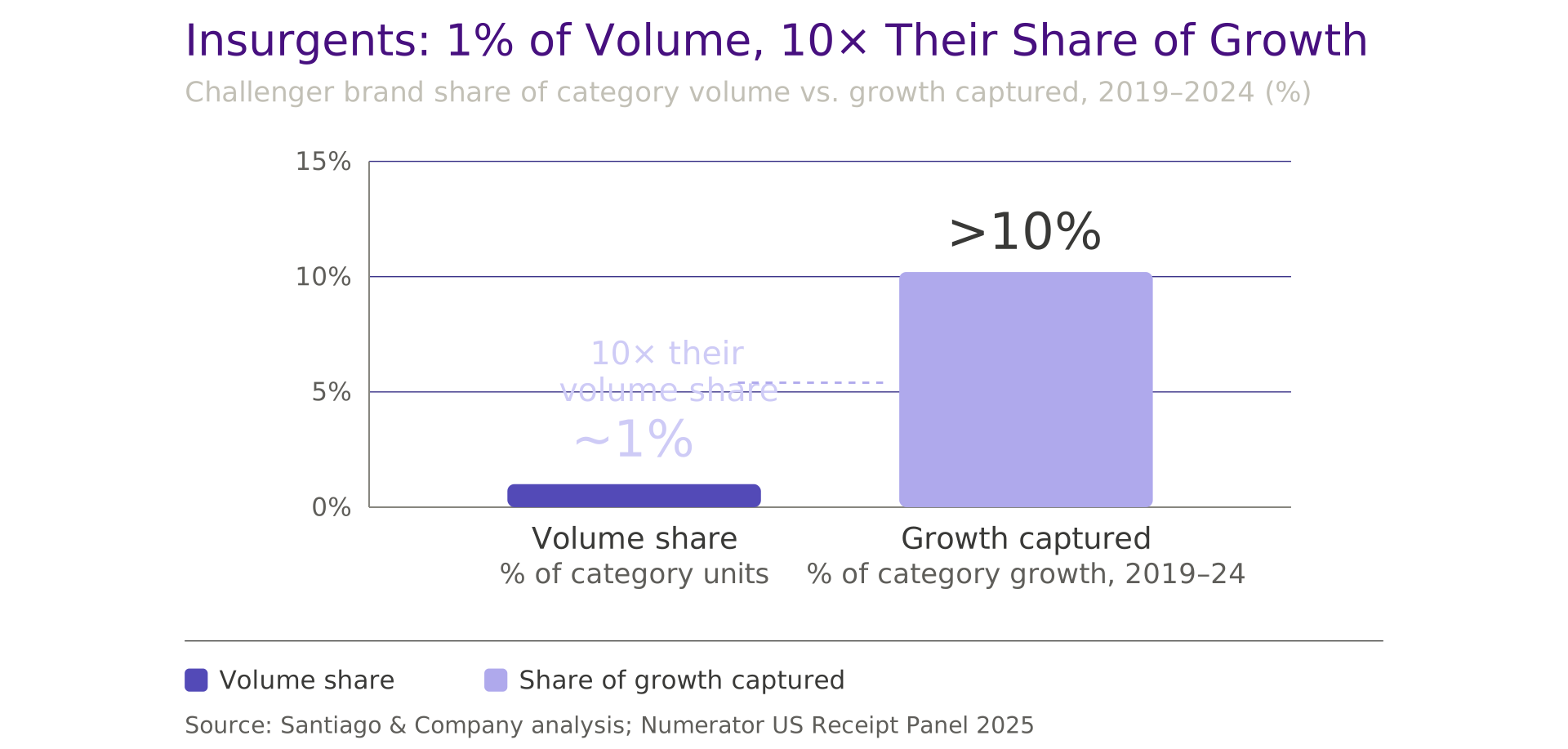
Insurgent brands are a different kind of challenge. In 2019, they had just 1 percent of category volume, but captured over 10 percent of category growth from 2019 to 2024. Small in size, they are growing quickly and changing narratives in categories like hand soap and surface care. Eighty percent of surveyed retailers said they want to add independent, innovative brands to their assortments. The shelf is opening, and insurgents are taking the opportunity.
Some incumbents have held their ground. Brands that invested in real innovation, refreshed marketing, and added credible "better for you" offerings took most of the growth in laundry, cleansers, and dishwashing. The path exists for incumbents, but it needs active investment, not a defensive approach.
Consumer relationships with home and hygiene products are changing. Products that once fit into clear categories like air fresheners or cleaners are now bought, combined, and judged differently. Consumers focus less on categories and more on needs: a home that smells good, a cleaner lifestyle, emotional ties to comfort, luxury, or wellness.
This change is blurring the lines between traditional home care categories. A brand once known for one function now competes for the same emotional space as brands from other categories, like beauty or personal care.
This change matters. Brands built around need states, not categories, have grown much faster. Brands that spanned need-state lines saw five-year CAGRs above 20% from 2019-2024.
The opportunity remains. Companies must rethink what they compete on, make products that cover multiple needs, and organize around how consumers think, not old shelf layouts.

The insurgent brands that are taking share in home and hygiene are not simply making better products. Many of them are competing on a fundamentally different operating model, one that is lighter on assets, faster to scale, and built for the marketing channels that matter most to younger consumers.
Challenger brands use third-party manufacturing, flexible supply, and lighter infrastructure. This frees capital for brand storytelling and experiential marketing, the keys to winning young consumers.
This is the beauty playbook, applied to categories that have historically competed on function. And it works. Consider Goodwipes, which built its brand through an influencer-driven strategy amplified by physical experiences, most notably, portable "Porta Palace" pop-ups at music festivals. The approach seems unconventional for a hygiene brand. That is exactly why it resonates with consumers who are looking for brands that fit their identity and reflect the culture they inhabit.
Established players are not standing still. Church & Dwight has publicly articulated an asset-light, brand-first model. Unilever has committed to reinventing its home and hygiene portfolio through design and marketing that drive consumer desire rather than relying solely on legacy brand equity. These are meaningful commitments. But most incumbents still have ground to make up in the speed, boldness, and cultural fluency that challenger brands have demonstrated.
The path forward for incumbents is not to replicate what challengers do; it is to apply the operating model principles that enable challenger agility at a scale only incumbents can leverage.
Following years of inflation, consumers are value-conscious. That much is understood. What is less well understood is what "value" means to them, and it is not simply the lowest price.
Seventy percent of the major US retailers we surveyed believe consumers are genuinely open to trading up, provided a brand can offer a compelling reason to do so. That is a meaningful signal. The challenge for brands is that "delivering a compelling reason" has gotten harder.
The hand soap market illustrates the dynamic precisely. At the functional end, private-label and low-cost brands reliably meet consumer needs. There is nothing wrong with them, and value-seeking consumers know it. But alongside that segment, a wave of premium and ultra-premium brands, drawing on design, fragrance, packaging, and brand storytelling from the beauty and cosmetics world, has entered and succeeded. Unit prices for some ultra-premium hand soaps now sit in ranges more commonly associated with skincare.
The hand soap story is not a story about consumers spending irrationally. It is a story about brands earning the right to premium pricing by delivering on emotional and functional dimensions that pure performance products cannot match. Consumers have a willingness to pay. But they will not unlock it for incremental product improvements or marketing claims they cannot feel.
Premiumization, done right, is a legitimate growth lever in home and hygiene. Done halfheartedly, it fails, and the consumer who tried the premium option and was disappointed will not come back.
Private brands in the US have been gaining shelf space for decades. What has changed is their nature and how consumers perceive them. The old narrative private label as the budget option, bought grudgingly by cost-constrained consumers, has been replaced by something more threatening to established brands.
More than 80 percent of US consumers now perceive private brands as equal or superior in quality and value to national branded offerings. That perception reflects reality. Retailers have invested significantly in private-label development: deploying proprietary shopper insights to guide formulation, improving sourcing and quality standards, and professionalizing packaging and branding. The output is no longer a pale imitation of national brands. In many categories, it is a credible alternative across all price tiers.
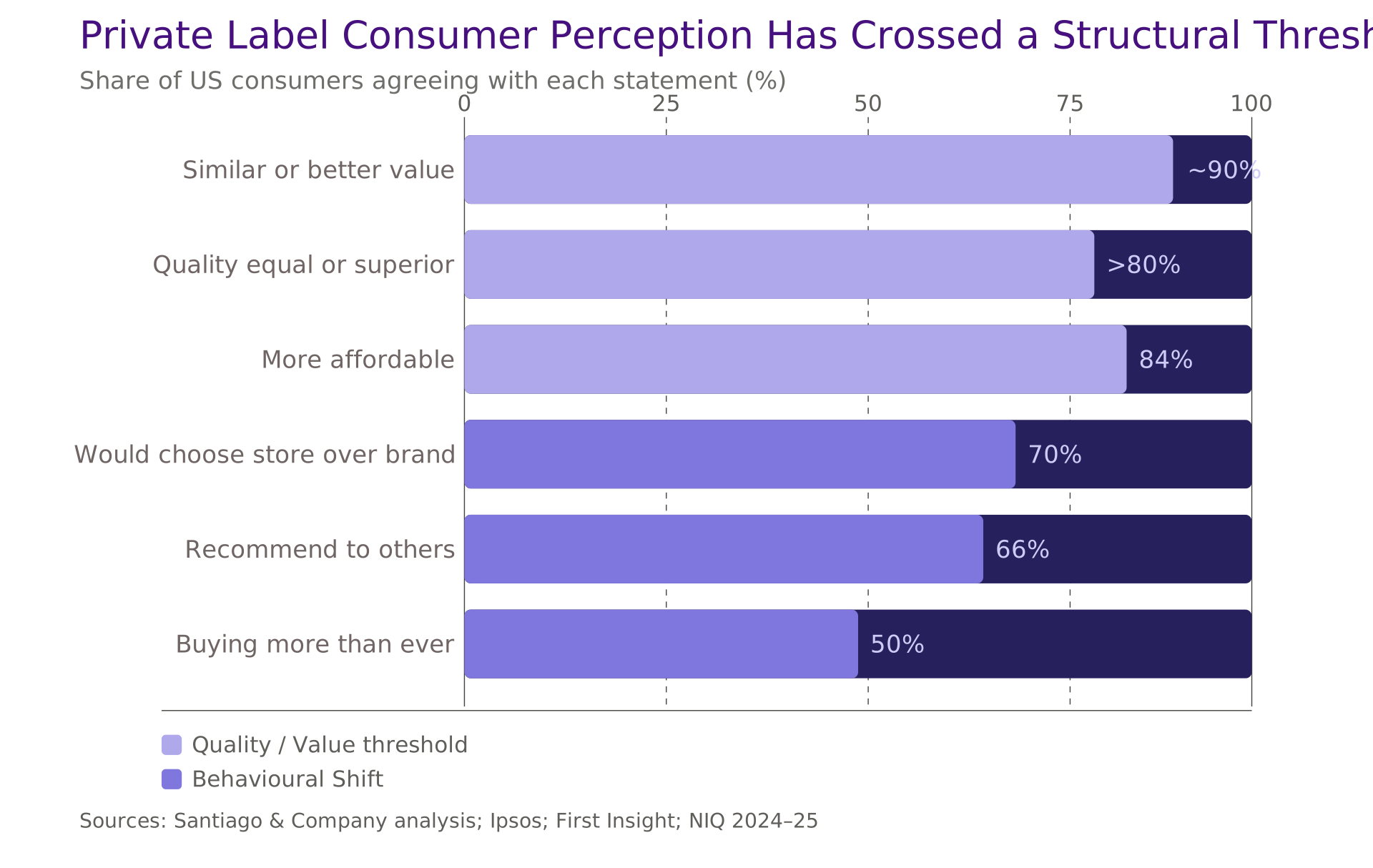
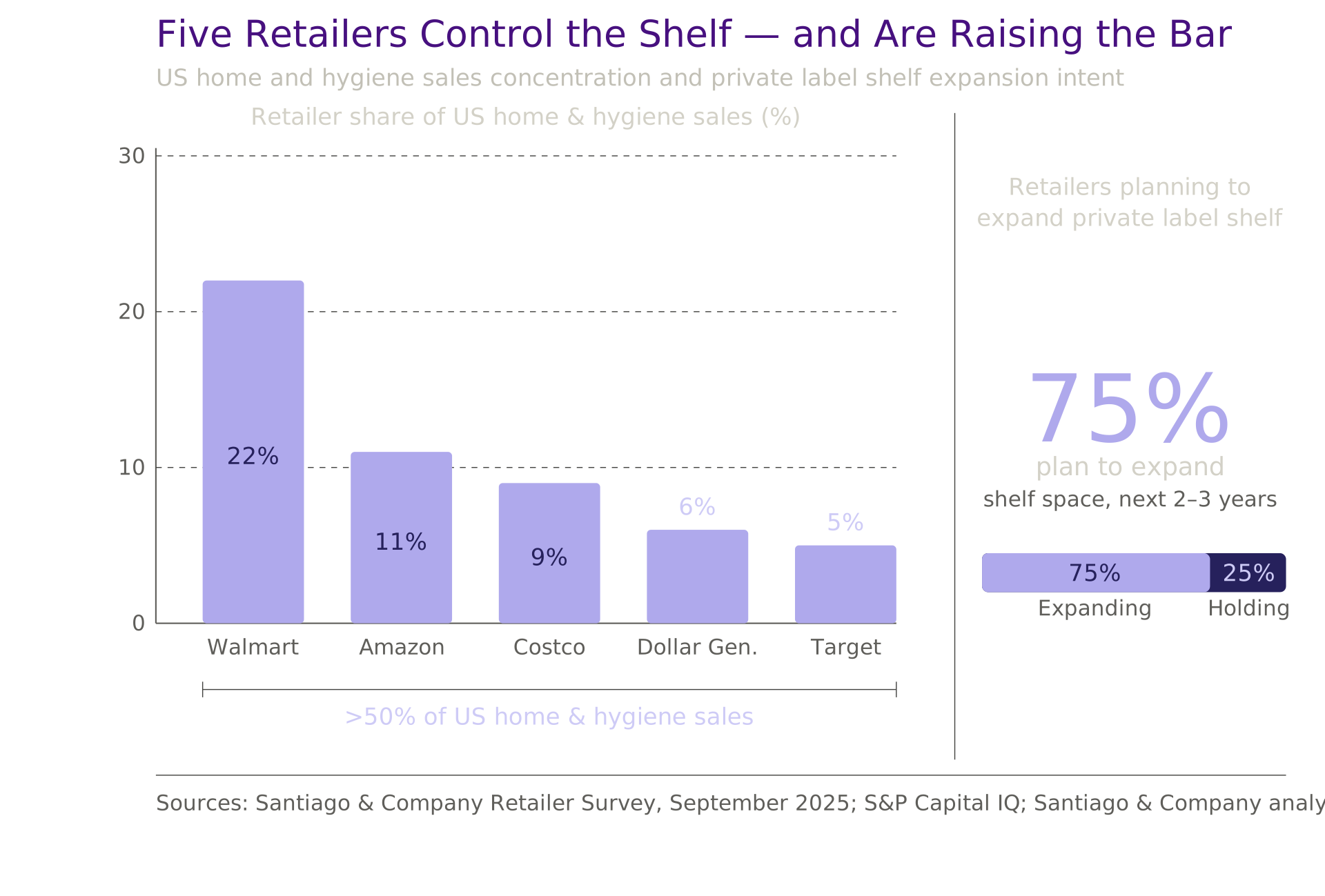
The consequence for incumbents is structural. Private brands are no longer competing only at the low end of the price spectrum. They are moving up, occupying middle tiers and, increasingly, premium tiers and competing with national brands across the full range. While many incumbent brands are losing shelf space, three-quarters of the retailer merchants in our survey expect to expand private brands' shelf space over the next two to three years.
The inflection point has arrived. National brands that respond by differentiating on genuine innovation, emotional resonance, and proven performance will hold their ground. Those that do not will continue to cede shelf space to retailers who have become far more sophisticated competitors than they were even five years ago.
Consumer behavior is reshaping the retail landscape. And as the biggest retailers grow, the rules they set for brands on their shelves are becoming more demanding.
Five retailers: Walmart, Amazon, Costco, Dollar General, and Target account for more than 50 percent of US home and hygiene sales and continue to grow their combined share. Their scale gives them leverage that smaller retail accounts simply do not have. And they are using it. These retailers want brands that innovate on "better for you" credentials, sustainability, efficacy, and packaging. Brands that fail to deliver on those dimensions risk losing placement. The merchants we interviewed were clear on this point: shelf space will be reallocated to brands that meet these criteria.
Winning in this context requires more than a good product. It requires understanding the unique preferences and strategies of each of the top five retailers and building tailored approaches for each.
Three specific areas matter most. First, price-pack architecture: the right pack sizes and formats, calibrated to each retailer's customer profile and operational preferences, can meaningfully support premiumization and drive incremental volume. Second, distribution as marketing: for legacy brands that have earned meaningful shelf presence, packaging, format, and in-store presentation can carry as much brand-building weight as digital advertising, and with today's online marketing costs, that matters more than ever. Third, retail media networks: all five of the major retailers now operate sophisticated, scaled retail media platforms, and the most effective brand teams are building integrated strategies that treat retail media investment as part of a broader partnership rather than a transactional line item.
The concentration of power in these five retailers is not reversing. Brands that develop genuine retail partnership capabilities, not just account management, will capture a disproportionate share of what growth is available in the sector.
The final force reshaping home and hygiene is also the least understood, and the one moving fastest. Agentic commerce, in which AI systems do the searching, comparing, and recommending that consumers once did themselves, is beginning to alter the path from household need to brand purchase.
As AI-powered shopping assistants become embedded in consumer devices, search interfaces, and retail platforms, the moment of brand discovery shifts. Instead of a consumer scrolling through search results or walking a retail aisle, an agent surfaces a shortlist. The criteria the agent applies and the content it can access will determine whether a brand appears on that shortlist.
The implication for home and hygiene brands is straightforward but demanding: product content, ingredient claims, efficacy documentation, and brand positioning must be optimized not just for human readers but for AI retrieval systems. This emerging discipline, generative engine optimization, or GEO, mirrors the logic of SEO but requires deeper product data and more structured content architectures than most brand teams currently maintain.
The major technology companies are already moving aggressively to establish positions in agentic commerce. The trajectory of AI-consumer interaction is evolving rapidly, from AI as a search aid toward AI as an empowered decision-maker acting on the consumer's behalf. For home and hygiene brands already contending with private label pressure, insurgent competition, and shifting category boundaries, arriving late to agentic commerce is not a neutral outcome. It is an active cession of ground.
Future leaders will build the internal capabilities and the product data infrastructure to show up prominently, accurately, and compellingly wherever agents are making recommendations.
Most home and hygiene companies will recognize themselves in the eight forces described here. Fewer will act with the speed and specificity the moment requires. That gap, between recognition and action, is where competitive advantage is currently being lost.
The companies pulling ahead are not running broader strategies. They are running narrower ones. They have made hard calls about which categories give them a genuine right to win, which retailer relationships are worth building versus managing, and which brands deserve investment versus harvest. That kind of portfolio honesty is uncomfortable. It is also the only way to concentrate resources where they can actually move the needle.
Three moves separate the leaders from the rest.
The first is getting brutally specific about where growth is actually available. Not sector-level projections, those are nearly useless. Category-level, subchannel-level, retailer-level. The 2–3 percent headline growth rate for the sector masks a wide distribution: some categories are growing at multiples of that rate, while others are in structural decline. Companies that still allocate resources to averages systematically overfund the wrong things.
The second is treating the innovation pipeline as a financial liability until proven otherwise. Most home and hygiene innovation programs are producing line extensions that retailers don't need, consumers don't notice, and private-label alternatives will undercut within eighteen months. The premium hand soap market didn't grow on incremental improvements; it grew on brands that made consumers feel something new. If your pipeline cannot honestly answer the question "why would a consumer pay more for this and tell someone about it," it needs to be rebuilt, not refreshed.
The third is preparing now for an agentic commerce environment, not when it arrives. The brands that will appear on AI-generated shortlists two years from now are the ones investing in product data infrastructure, structured content, and GEO capabilities today. This is not a digital marketing project. It is a strategic positioning decision, and the window to build a first-mover advantage is closing.
The eight forces in this article are not a prediction. They are already operating. The question for every home and hygiene leadership team is not whether to respond; it is whether they will move fast enough, and with enough conviction, to respond before their competitors do.


Aerospace and defense companies will convert record demand into revenue only by managing qualified throughput. The scarce asset is qualified throughput, and it has to be managed node by node. The approved combination of site, process, workforce, and part at the individual production-node level.
Santiago & Company announced the public release of the AI Workforce Stability Architecture (AWSA) at the United Nations WSIS Forum 2026, introducing an open framework that helps governments monitor, prepare for, and respond to the economic and fiscal impacts of AI-driven labor displacement in service-export economies.
AI is moving on a 15-month clock; governments are moving on a five-year one. For service-export economies, the winners will not be those that forecast labor disruption most precisely, but those that pre-wire fiscal and workforce responses before the evidence becomes undeniable
SpaceX does not need to disrupt the wireless industry to reshape it. By turning satellite coverage into negotiating leverage, it is forcing carriers to rethink who owns the customer relationship when coverage comes from space.