February 3, 2026

Managing Partner

Dealer profitability increasingly depends on turning parts and service operations into high-performing, data-driven profit engines that sustainably absorb fixed costs and reduce reliance on vehicle sales margins.
Dealer groups are increasingly recognizing that the path to sustained profitability often runs through their parts and service operations. These departments, long known for delivering high margins and reliable revenue, have demonstrated exceptional resilience amid shifting market dynamics. Service department margins routinely range from 45 to 55 percent, and Santiago & Company’s analysis confirms their remarkable ability to withstand economic downturns. Even as consumers may defer discretionary purchases, the essential nature of vehicle repair and maintenance keeps demand for these services fundamentally intact. The number of vehicles in operation across the United States continues to climb, increasing by approximately 0.7 percent per year and adding nearly 4 million vehicles to American roads each year. This expansion is not confined to passenger cars; similar forces are at work in adjacent categories, including recreational vehicles, boats, off-road vehicles, and the broader powersports sector. Each segment represents a vital, and still under-realized, contributor to the stability and future growth of dealership profitability.
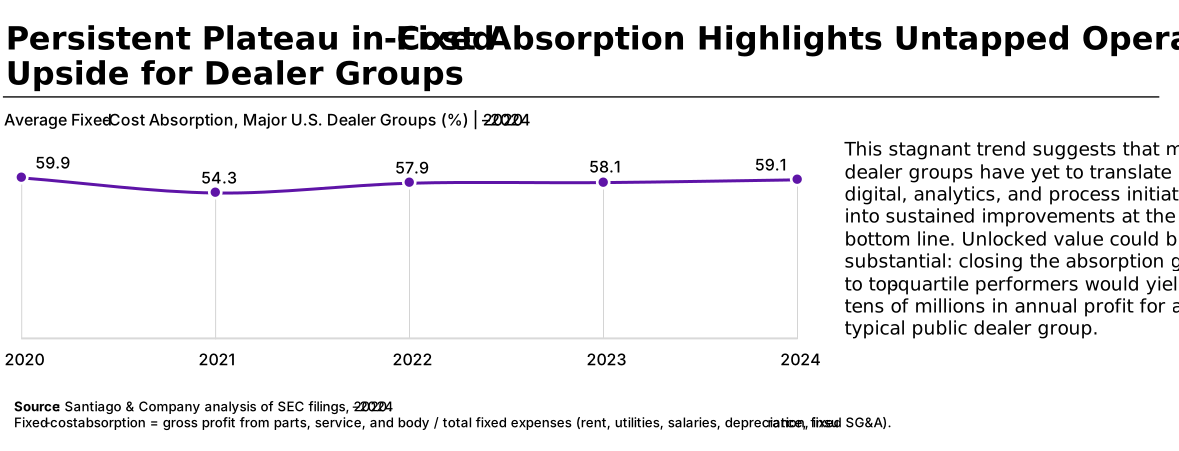
While some best-in-class and private dealer groups now routinely achieve fixed-cost absorption rates at or above 80 percent, and in some cases even exceeding 100 percent, the industry average has remained largely unchanged since 2020. As a result, many dealer groups are leaving significant profit unrealized. Santiago & Company analysis suggests that a mere one percent improvement in fixed-cost absorption could yield between $20 million and $40 million in additional annual gross profit for a large public dealer group. To translate this into more tangible terms, such an improvement could mean an increase of approximately $200,000 to $400,000 in profit per store annually, or boost service-lane hours sold by about 500 to 1,000 hours per store. Exhibit after exhibit confirms that this is a replicable outcome, not an outlier, as several high performers have shown that these higher rates are not only attainable but sustainable.
Barriers to Progress: Retention, Capacity, and Market Change
What accounts for the wide gulf between industry average and top-tier performance? Experience shows that leading groups distinguish themselves by executing on three fronts: boosting customer retention, expanding their service capacity, and increasing their agility to navigate a rapidly shifting automotive landscape. Each, however, presents its own persistent challenges.
Customer retention remains a perennial concern for dealerships. In the initial years after a customer purchases a new vehicle, their reliance on the dealer’s service department is strong, driven largely by manufacturer warranty coverage and a perception of higher quality or trustworthiness. Yet, as vehicles age, customers gradually shift to independent repair shops for their service and parts needs. The transition is gradual but relentless. Data shows that while dealer service departments retain a relatively robust share of customers for the first three to seven years, this share falls sharply after the eighth year, dropping to an average of just 25 percent. The forces behind this erosion are multifaceted, ranging from consumer price sensitivity and convenience to perceptions of expertise and location, but the impact is unequivocal: the longer a customer owns a vehicle, the less likely they are to return to the dealer for service.
To address this, best-in-class dealers are leveraging new tools and technologies to foster loyalty and proactively engage customers. Digital marketing, powered by advanced analytics and generative AI, has made personalized offers and targeted communication more accessible and effective than ever before. Dealers can now build granular customer profiles by combining CRM data with external demographic and behavioral information, enabling them to anticipate maintenance needs, tailor incentives, and send timely, relevant messages. This approach not only increases conversion rates by approximately 20 percent but also strengthens the dealer’s position throughout the entire customer lifecycle.
Convenience is a second, critical driver. Dealers who align their service availability with evolving customer expectations, such as extending hours, increasing staffing at peak times, or offering appointment flexibility, can provide a seamless, frictionless experience that fosters long-term loyalty. The integration of digital self-service tools, whether through mobile apps or web portals, enables customers to choose their preferred service center, schedule and manage appointments, and receive real-time updates on their vehicle’s status. These touchpoints are complemented by features such as digital approvals, photo and video-based repair recommendations, and post-service follow-up surveys that not only enhance customer satisfaction but also generate actionable feedback for continuous improvement.


Service capacity constraints, particularly technician shortages, have emerged as a formidable headwind for the industry. The U.S. Bureau of Labor Statistics projects that approximately 67,800 openings for automotive service technicians and mechanics will exist annually through 2033. The roots of this challenge are deep: an aging workforce, a declining pipeline of new entrants, and limited awareness or appeal of technician careers among younger generations. For dealerships, the result is underused service facilities and, by extension, lost revenue.
To combat these shortages, leading dealer groups are rethinking how they attract, develop, and retain talent. Flexible appointment scheduling, which benefits both customers and staff, has proven effective in making technician roles more attractive. Some dealers are experimenting with three- or four-day workweeks, while others are introducing multiple shift options to attract a wider labor pool. Forward-thinking dealerships are also establishing partnerships with local trade schools and community colleges, creating targeted training and scholarship programs that not only build a steady talent pipeline but also provide clear career advancement opportunities for area residents. Innovative training experiences, such as having senior technicians mentor new recruits, particularly on high-end or technologically advanced vehicles, help transfer knowledge and accelerate skill development.
Dealers must also contend with macroeconomic pressures and evolving market dynamics that continue to reshape the automotive landscape. Margins on new and used vehicle sales have come under sustained pressure, in part due to increasing supply, rising interest rates, and higher inventory carrying costs. Retailer profit per unit has steadily declined since its December 2021 peak as supply chains have normalized and production has increased. At the same time, persistently high inflation and elevated financing costs have further dampened consumers’ ability or willingness to purchase new vehicles.
The shift toward battery electric vehicles (BEVs) represents both a challenge and an opportunity. While it will take years for the vehicle parc to reflect a substantial share of BEVs, rising adoption is already influencing service demand. BEVs typically require fewer routine maintenance services than internal combustion engine (ICE) vehicles, creating a potential headwind for service revenue. However, BEV repairs are generally more complex, leading BEV owners to rely more heavily on dealership service centers. Servicing these vehicles requires dealers to invest in new equipment, ongoing technician training, and adapted operational models, a non-trivial but necessary outlay for those aiming to stay ahead.
Although dealers cannot control the broader economic environment, they can influence performance through targeted operational improvements. The evidence suggests that efforts should focus on three core areas: enabling volume growth, enhancing throughput to meet demand, and increasing revenue per repair order (RO).
Dealers who successfully expand their parts and service sales volumes do so by optimizing operations on several fronts. Personalization stands out as a key tactic. By anticipating vehicle maintenance needs and engaging customers with personalized outreach, dealers can meaningfully enhance customer lifetime value. Building robust customer profiles that combine dealer CRM data with third-party sources, such as local search patterns and demographic insights, enables precise targeting of incentives and communications. The result is a more practical, customized, and timely customer experience.
Appointment scheduling is another essential lever. Dealers can maximize convenience and, by extension, customer loyalty, by ensuring service availability aligns with customer needs, extending hours, or offering multi-location scheduling within a 24- to 48-hour window. Self-service digital tools further enhance the customer journey. Through mobile apps or web interfaces, customers can identify the most convenient service center, book and manage appointments, and receive driving directions. Dealers can provide updates via email or text, recommend repairs using photos and videos, allow digital approvals and payments, and follow up with surveys and rebooking options.
No matter how advanced a dealer’s marketing, analytics, or outreach efforts may be, customer satisfaction will not improve if service capacity is constrained. Dealers must therefore optimize their service centers’ throughput to match volume, a task closely tied to both technician staffing and workflow management.
Flexible scheduling not only appeals to customers but also helps recruit and retain technicians. Offering flexible hours, compressed work weeks, and multiple shifts can broaden the pool of potential candidates. Dealers can supplement these approaches by designing engaging training experiences for enthusiastic or particularly adept new technicians and by providing mentorship for high-value or complex repairs. Building a talent pipeline also means forging partnerships with local educational institutions and supporting training programs and scholarships that create a steady stream of talent and provide clear career paths for technicians.
Workflow optimization plays a critical role. Assigning technicians to jobs that match their skills, optimizing parts stock, and organizing express and mainline team structures all contribute to higher throughput. Dealers who establish a single queue and unified operation for express and mainline work can allocate technician time more effectively. The use of predictive analytics, leveraging service history and real-time vehicle status, helps ensure labor and inventory are available as needed, reducing out-of-stock parts and long lead times for custom orders.
Eliminating waste is a third pillar of operational excellence. Moving to paperless operations increases efficiency in multiple dimensions. Technicians can submit repair order annotations digitally, reducing paperwork time and increasing customer-facing engagement. Consistency and completeness in digital recordkeeping also enhance data security, improve regulatory compliance, and increase team cohesion. Going paperless has additional benefits, such as better data quality, greater transparency, and improved customer trust.
Generative AI tools further enhance productivity. AI-powered chatbots can guide technicians through repairs, provide on-the-spot troubleshooting, and assist with parts ordering by matching vehicles to specific part numbers in inventory. This support reduces the time required for diagnosis and repair, increases first-time fix rates, and allows less experienced technicians to learn more rapidly under the supervision of digital agents.
Dealers can also increase profitability by maximizing revenue per repair order. Next-generation diagnostic practices, such as the use of high-resolution photos and video, build customer trust by increasing transparency, which in turn drives higher conversion rates for additional service requests. Conducting thorough multipoint inspections within 30 to 60 minutes of vehicle drop-off allows for timely updates, ensures customers have adequate time to approve additional services, and enables more effective inventory management. Personalized recommendations included in inspection reports can highlight accessories or services that match the customer’s needs and preferences.
Predictive parts ordering is another improvement tool. By understanding which parts are historically sold and which vehicles and customers are booked for service in a given week, dealers can dynamically ensure that the right inventory is available. This not only improves repair order conversion by minimizing customer wait times but also frees up working capital that would otherwise be tied up in slow-moving inventory.
Realizing these opportunities requires a disciplined, structured approach. Dealer group leaders must begin by evaluating the factors contributing to underperformance in fixed-cost absorption, including macroeconomic factors and local operational realities. This assessment should include a rigorous review of true demand for parts and service, considering the current vehicle parc and shifts in demand over the past three to five years. Benchmarking technician attraction and retention, evaluating total value potential from optimal fixed-cost absorption, and identifying the highest-impact business areas or micromarkets for capital redeployment are crucial steps. Tools such as capacity assessments can reveal the incremental profit that could be captured by fully utilizing every service bay.
Leaders should also inventory the net-new capabilities required to reach full profitability potential. Examples include dashboards and reporting systems that provide detailed metrics on service bay utilization, as well as analytics that track performance throughout the service journey. Reviewing the incentive models in use and identifying opportunities to encourage desired behaviors can further reward performance that enhances dealer success.
Once leaders have a clear-eyed understanding of both their current state and untapped potential, they can build a detailed roadmap to transform parts and service operations into enduring profit pools. Those who have already achieved the basics of operational improvement should not rest: the next phase of value creation will involve rewiring dealerships for the data-driven era. Fully predictive, automated inventory management; AI-based lead management that dynamically matches customer needs with real-time shop capacity; and digital service adviser “agents” that provide personalized, streamlined customer journeys are just a few of the innovations leading dealerships are deploying.
By systematically evaluating their service operations, eliminating bottlenecks, and adopting advanced data and analytics capabilities, dealers can maximize profitability and build new sources of long-term resilience. The opportunity is as clear as it is substantial: with strategic action, the service lane can be transformed from an ancillary function into a sustainable engine of growth and profit for years to come.


Aerospace and defense companies will convert record demand into revenue only by managing qualified throughput. The scarce asset is qualified throughput, and it has to be managed node by node. The approved combination of site, process, workforce, and part at the individual production-node level.
Santiago & Company announced the public release of the AI Workforce Stability Architecture (AWSA) at the United Nations WSIS Forum 2026, introducing an open framework that helps governments monitor, prepare for, and respond to the economic and fiscal impacts of AI-driven labor displacement in service-export economies.
AI is moving on a 15-month clock; governments are moving on a five-year one. For service-export economies, the winners will not be those that forecast labor disruption most precisely, but those that pre-wire fiscal and workforce responses before the evidence becomes undeniable
SpaceX does not need to disrupt the wireless industry to reshape it. By turning satellite coverage into negotiating leverage, it is forcing carriers to rethink who owns the customer relationship when coverage comes from space.