February 3, 2026

Managing Partner

The global shift to affordable electric vehicles hinges on reducing battery costs and closing the efficiency gap with leading Chinese manufacturers; Western automakers must innovate across design, supply chain, and customer value to remain competitive.
The automotive sector stands at a pivotal crossroads as it confronts the complex challenge of transitioning from internal combustion engines (ICEs) to battery-electric vehicles (BEVs). Cost, above all, remains the primary obstacle to widespread BEV adoption. While regulatory mandates, such as the European Union’s ambitious fleet emissions targets of 49.5 grams of CO₂ per kilometer by 2030, initially propelled the industry forward, success now depends on whether manufacturers can close the cost gap with traditional vehicles. Strict penalties for exceeding these emissions thresholds continue to incentivize the move toward electrification, yet economic realities cast a long shadow over future growth.
Although geopolitical disruptions and the evolving landscape of climate policy have moderated the pace, current forecasts indicate that global BEV sales must expand at a compound annual rate of 18 percent through 2030 to remain on track with established regulatory goals. To achieve this trajectory, BEVs must gain meaningful traction in mass-market segments well before the decade’s end. Even as the total cost of ownership, which includes factors such as purchase price, maintenance, electricity, taxes, and insurance, has become favorable in certain key regions, the premium price tags attached to BEVs continue to deter many prospective buyers.
The battery pack is the single largest contributor to the cost of a BEV, typically accounting for 30 to 40 percent of the vehicle’s total cost. Despite substantial reductions in battery prices over recent years, the cost for legacy manufacturers can still reach or exceed $17,500 per pack. Meanwhile, leading Chinese manufacturers have achieved cost advantages of 25 to 40 percent, firmly establishing new industry benchmarks for efficiency and value. These developments have prompted a reassessment of competitive dynamics among Western manufacturers, who now face mounting pressure to match or surpass these advancements.
Chinese companies have succeeded by radically simplifying battery architecture, embracing lower-cost cell chemistries, especially lithium iron phosphate (LFP), and relentlessly optimizing component costs. As a result, these manufacturers have reduced battery pack expenses to approximately $76 per kilowatt-hour (kWh) for LFP-based solutions and $96 per kWh for lithium nickel manganese cobalt (NMC) variants. The resulting cost gap, which amounts to $2,300 to $4,700 for midsize vehicles produced in China, has helped accelerate a notable shift in global market share. Incumbent automakers in Europe and North America have, in some cases, seen market shares erode by as much as 50 percent since 2023, underscoring the disruptive impact of these cost innovations.
If Western original equipment manufacturers (OEMs) intend to remain competitive, they must adopt new approaches that address both the structural and strategic sources of cost. These efforts must extend from platform architecture and component design to supply chain resilience, chemistry innovation, time-to-market, and the long-term value delivered to customers.
Cost leadership in battery manufacturing arises from three primary factors: streamlined architectural design, judicious selection of cell chemistry, and rigorous cost control in component sourcing. By minimizing the number of parts and simplifying the technology underpinning battery systems, Chinese OEMs have set a pace that others must now match or exceed. For example, a greater focus on LFP chemistry has enabled a step-change in price efficiency, while innovations in cell-to-pack (C2P) architecture have further consolidated these gains.
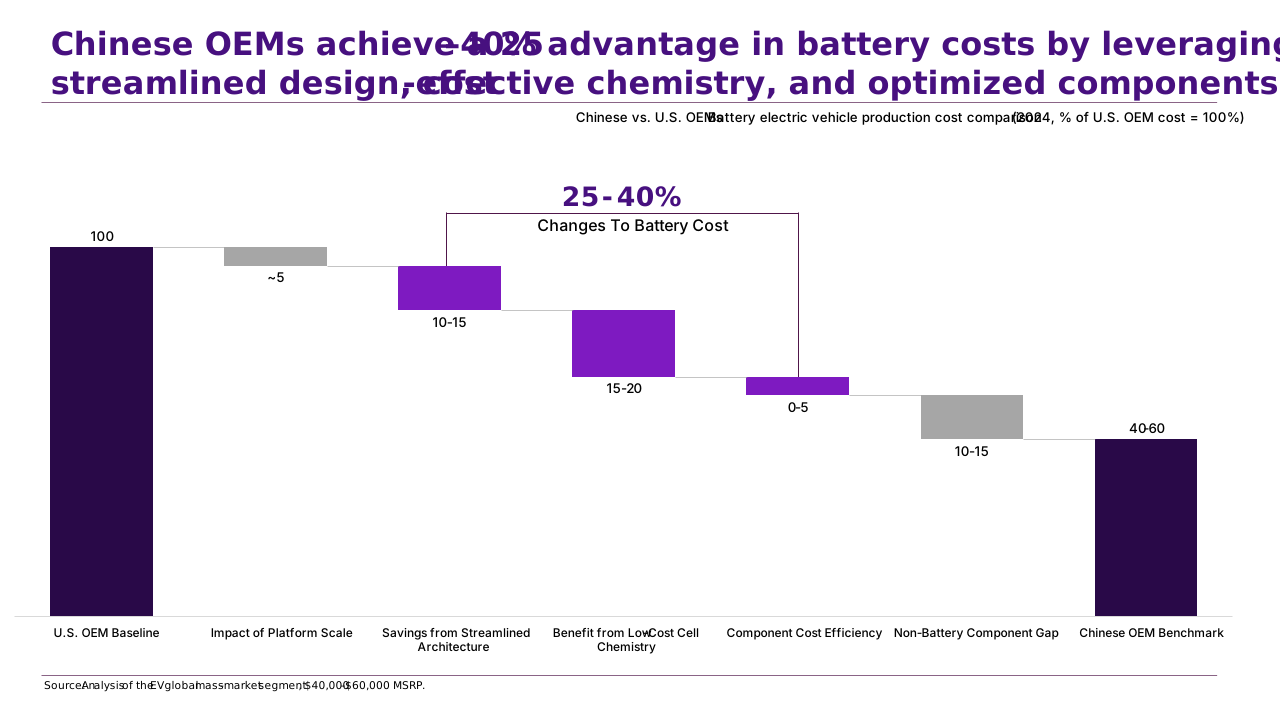
Chinese manufacturers’ focus on simplified construction has not come at the expense of performance. Rather, by leveraging advanced production methods and innovative cell formats, they have enhanced both efficiency and cost-competitiveness. Their example highlights a path forward for Western OEMs seeking to close the gap: an acceptable cost structure combined with clear customer value propositions can help stem further losses in market share, even if Chinese manufacturers retain a structural cost advantage.
Several intertwined challenges must be addressed for Western automakers to succeed in the fiercely competitive BEV market. These include platform architecture, component design, cell chemistry, supply chain optimization, speed of innovation, and the maximization of customer value across the vehicle life cycle.
OEMs that have achieved lower costs tend to do so by simplifying battery pack design, integrating functions more tightly, and limiting the number of platform variants. In 2019, two Chinese firms announced pioneering C2P battery architectures that eliminated the need for discrete battery modules by integrating large cells directly into the pack structure. The following year, another disruptor introduced a pack capable of charging from unstable power sources, and by mid-2025, European companies had begun to launch their own C2P models. Meanwhile, Chinese competitors continued to unveil advanced third-generation C2P designs.
The logic is compelling: rather than adapting BEV portfolios to fit existing ICE platforms, leading manufacturers are increasingly designing vehicles around the battery pack itself. Many legacy OEMs, however, continue to prioritize maximizing component overlap across ICE, hybrid, and electric models. This strategy, while yielding short-term economies of scale, often results in suboptimal packaging and compromised efficiency. For example, placing battery cells in non-ideal locations, such as the footwell, or situating chargers in crash-prone areas, introduces inefficiencies and potential safety concerns.
The effects are not trivial. Weight differences of 5 to 10 percent are common among OEMs employing different architectural strategies, with C2P designs offering 2 to 4 percent total weight savings and more than $600 in direct cost reductions per vehicle. Further savings are possible by integrating high-voltage components into shared housings, cutting additional costs by at least $60 per vehicle. Yet many legacy automakers remain encumbered by the inertia of multipowertrain strategies, which, although valuable in niche or low-volume segments, ultimately restrict progress toward best-in-class BEV design.
The global battery supply chain is deeply influenced by rapidly changing geopolitical realities. China, with its expansive network of suppliers and stronghold on raw materials, continues to dominate the market, offering highly competitive prices and favorable contract terms. Many Western OEMs, in their pursuit of supply chain resilience, pay 15 to 30 percent premiums to source components from factories in Europe, Japan, or the United States, where higher labor, energy, and material costs prevail.
Yet even with these premiums, supply chain security remains elusive, especially for LFP cells, where China controls the overwhelming majority of production. In situations of market oversupply, Chinese suppliers can flexibly adjust pricing, leveraging their scale and integration to retain market leadership.
To adapt, Western OEMs increasingly adopt a hybrid “make and buy” approach, producing some battery variants in-house while relying on external suppliers for others. Partnerships with specialized engineering firms help to manage complexity and provide access to advanced technologies as needed.
Traditional automakers are hampered by development cycles that are typically twice as long as those of their Chinese counterparts, stretching in some cases to nearly a decade. This slow pace reflects a legacy emphasis on maximizing factory and equipment utilization, often at the expense of agility.
Disruptors, on the other hand, have greater latitude to invest in new production equipment and novel pack architectures, as their capital expenditure efficiency accounts for less than 3 percent of product cost in state-of-the-art gigafactories. The vast majority of the cost, over 90 percent, comes from raw materials.
To narrow the innovation gap, incumbents may consider accelerating the introduction of flagship vehicles, using these models as testbeds for new battery technologies. Strategic partnerships and dual sourcing can offer pathways to catch up with China’s vertical integration, but success will require legacy manufacturers to reestablish innovation capabilities that have long been outsourced.

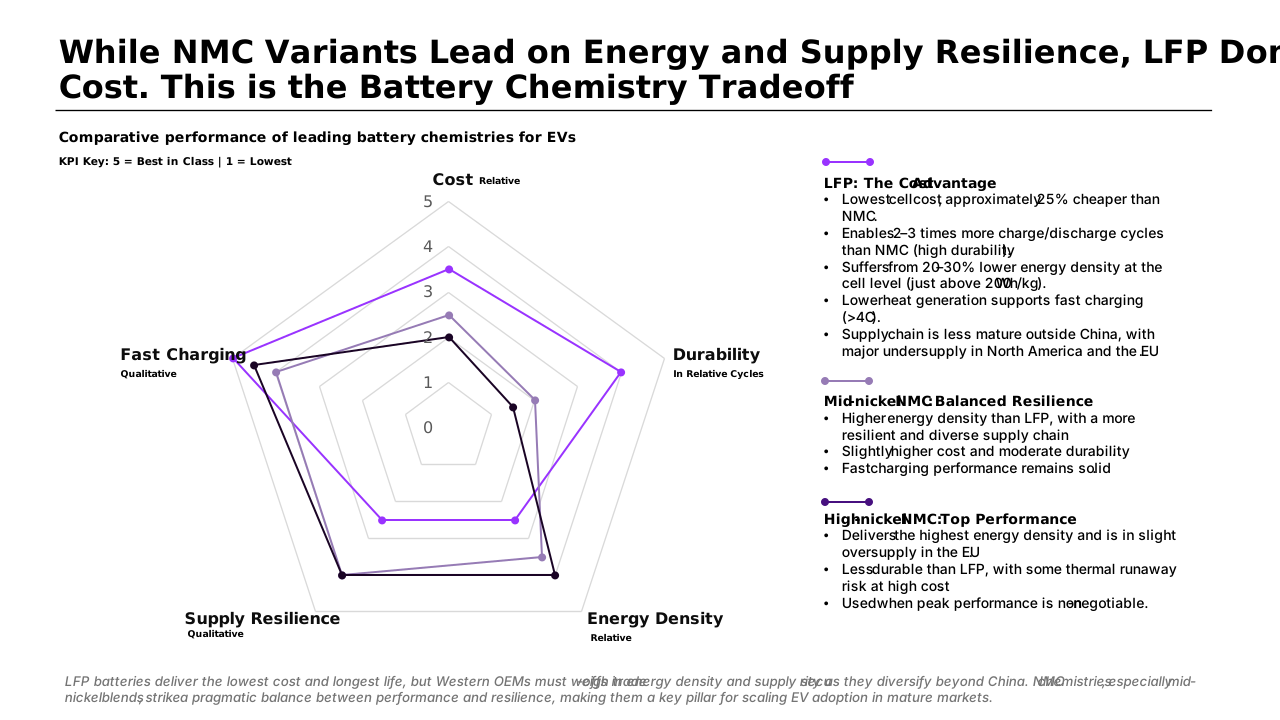
While most customers are unaware of the specific battery chemistries used in their vehicles, these choices profoundly influence upfront price, total cost of ownership, and practical range. LFP chemistry, now widespread among Chinese manufacturers, offers lower costs and safety advantages compared with other lithium-ion variants but has a lower energy density. To offset this, some OEMs have implemented fast-charging capabilities that can restore a significant state of charge, between 10 and 80 percent, in as little as ten to fifteen minutes.
Adoption of LFP chemistry by Western OEMs has lagged, due in part to an underdeveloped value chain and a persistent preference for maximizing range, even at greater cost. Decision makers frequently adhere to a “pay more for more range” mindset, charging an additional $3,500 to $6,000 for roughly 20 percent more range, despite many drivers only needing this capability a handful of times each year.
Looking ahead, Western manufacturers are expected to introduce a wider array of LFP-based vehicles to better serve price-sensitive market segments. Some are also experimenting with mid-nickel chemistries, such as lithium manganese-rich or lithium manganese nickel oxide, which promise a better balance between cost, energy density, and supply security.
Beyond chemistry, the form factor of battery cells, whether pouch, cylindrical, or prismatic, also shapes cost and performance. Pouch cells have declined in popularity due to the increased complexity of thermal management and safety requirements. Prismatic and cylindrical cells, in contrast, offer higher packing density and ease of manufacturability, respectively. The market has not yet settled on a definitive winner, with most OEMs maintaining flexible approaches as they pursue optimal performance.
Legacy manufacturers often add layers of complexity to their BEV architectures, striving to differentiate by imposing additional requirements and subsystem interfaces. While this customer-first approach has yielded impressive advances in corrosion resistance, stiffness, and durability, it also raises costs, sometimes by several hundred dollars per vehicle. Importantly, these improvements are seldom visible or compelling to buyers at the point of sale.
Manufacturers that have made the greatest strides in cost reduction have done so by favoring first-principles design. Notable examples include blade batteries or prismatic C2P designs, both of which can trim more than $600 from the unit cost, as well as single-stage charging architectures that save up to $170 per vehicle.
Capital expenditure for battery pack plants is another area ripe for optimization. Equipment accounts for around 60 percent of the cost, with the remainder split between building and infrastructure. Although these investments represent just 3 to 5 percent of unit cost, they are critical to the broader business case. Product design has a direct impact on manufacturing complexity: cell-based designs, for instance, can reduce assembly steps and simplify the production process. Asian suppliers, in particular, have demonstrated the ability to deliver advanced process technologies at lower overall capital expense, fueling rapid expansion into new regions.
Designing for serviceability presents a unique dilemma. Disruptors typically limit the serviceability of their batteries, as laptop manufacturers do, prioritizing lower weight and cost. Incumbents, by contrast, often accept reduced battery capacity, higher weight, and increased cost in exchange for greater serviceability, even though real-world repair rates are low and the economic case for battery repair is weak.
Even as sticker price remains a decisive factor for consumers, several other issues inhibit BEV adoption. Chief among these is uncertainty regarding the future evolution of battery technologies and the longevity of battery packs, particularly for LFP and NMC chemistries. Depending on driver usage patterns, EV batteries can last between ten and twenty years, but the high cost of replacement creates understandable anxiety among buyers.
Depreciation compounds the issue. Many BEVs today experience sharper declines in resale value than comparable ICE vehicles, with some models losing as much as half their value within 3 years. This pattern does not always reflect the vehicles' actual technical condition or practical utility.
Operating costs, too, present a mixed picture. Electricity prices vary considerably across regions, and high public or fast-charging costs can erode the maintenance advantage that BEVs otherwise enjoy over ICE vehicles. Vehicle efficiency, measured in terms of electricity consumption per kilometer, has become a renewed focus for OEMs intent on delivering greater value to customers.
Manufacturers have a clear opportunity to differentiate by improving the total cost of ownership. Strong aftermarket services, affordable repairs beyond the warranty period, and a proactive approach to communicating battery durability can all help to build customer confidence and support higher resale values. While some disruptors have made incremental gains in engineering standards, teardown analyses still reveal persistent gaps in design quality and durability compared to incumbent OEMs.
Recent technological advances from industry leaders serve as a clarion call for Western OEMs. To regain a competitive footing, they must recalibrate product requirements, invest in advanced manufacturing lines, and identify opportunities to rationalize the supply chain. Emulating the cost discipline and sourcing expertise of Chinese manufacturers is essential.
Closing the cost–performance gap requires targeted action. OEMs must develop cost-effective battery pack designs that leverage C2P and cell-to-chassis architectures, while aligning product expectations with realistic customer needs. Widespread adoption of lower-cost chemistries and simplified portfolio management can yield substantial savings. Standardizing platforms and reducing unnecessary variants unlock further efficiencies, as does integrating cost-reduction measures early in the design phase. In some cases, such measures can lower capital expenditures by more than 30 percent and shrink manufacturing footprints by more than 40 percent.
At the same time, OEMs should strive to reclaim leadership in customer value through unique selling propositions. Innovations in next-generation chemistries, solid-state, lithium-sulfur, and sodium-ion, promise to leapfrog existing solutions, but ultimate success hinges on delivering batteries with proven longevity, low service costs, and strong resale value. Range extender models, which blend established ICE expertise with new battery technologies, may help serve customers who require both flexibility and affordability.
No automaker will succeed in isolation. Winning in this new era will require forging deep partnerships with suppliers, scaling local production capabilities, and collaborating with policymakers to unlock incentives for competitive manufacturing, particularly in regions where cell production lags behind global leaders.
Although China currently sets the pace in reducing battery costs, Western OEMs are hardly standing still. Achieving true cost excellence will depend on balancing financial discipline with a relentless focus on customer value. The strategic choices made today will determine not only which firms lead in the electrified era, but which ultimately survive as the industry undergoes one of its most profound transformations.



Aerospace and defense companies will convert record demand into revenue only by managing qualified throughput. The scarce asset is qualified throughput, and it has to be managed node by node. The approved combination of site, process, workforce, and part at the individual production-node level.
Santiago & Company announced the public release of the AI Workforce Stability Architecture (AWSA) at the United Nations WSIS Forum 2026, introducing an open framework that helps governments monitor, prepare for, and respond to the economic and fiscal impacts of AI-driven labor displacement in service-export economies.
AI is moving on a 15-month clock; governments are moving on a five-year one. For service-export economies, the winners will not be those that forecast labor disruption most precisely, but those that pre-wire fiscal and workforce responses before the evidence becomes undeniable
SpaceX does not need to disrupt the wireless industry to reshape it. By turning satellite coverage into negotiating leverage, it is forcing carriers to rethink who owns the customer relationship when coverage comes from space.