Managing Partner

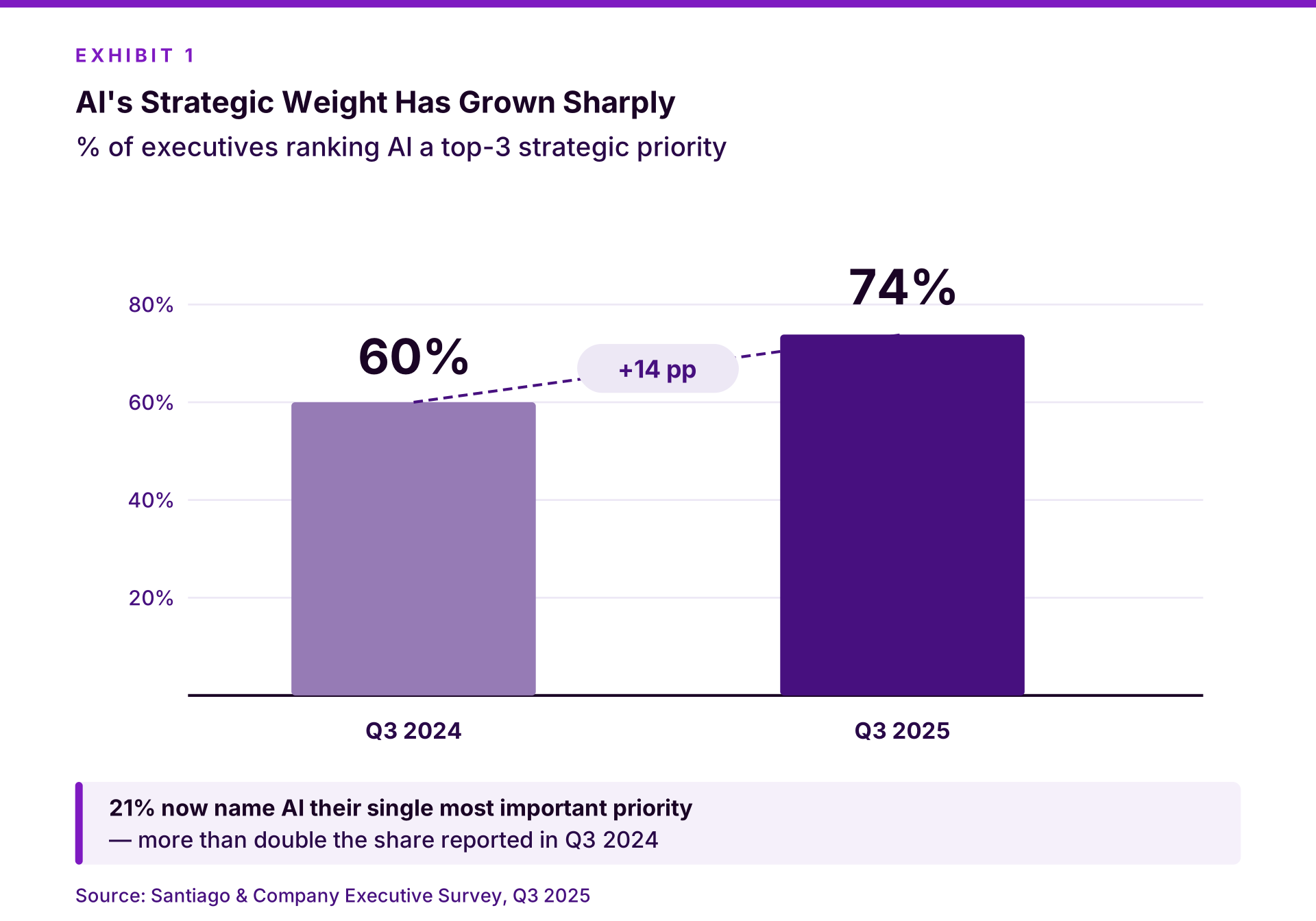
Most organizations have moved from AI experimentation to active deployment. 74 percent of executives now rank AI among their top three strategic priorities, but only 23 percent can draw a direct line from their AI investments to improved financial results. The companies closing that gap share a common pattern: they have moved from using AI as an assistant to deploying it as an autonomous operator of complete workflows, and they have built the institutional infrastructure to keep doing it well.
Three years into generative AI’s rise as a strategic imperative, the question companies were asking was, " Will this work at scale? It is finally getting an answer. And for most, the answer is yes. Santiago & Company’s latest executive survey finds that AI adoption has moved decisively beyond the pilot stage. Satisfaction is high, use cases are proliferating, and the technology is beginning to show up in real financial results. But that progress carries an important asterisk: strong satisfaction scores don’t automatically translate into P&L impact, and the companies that are getting there have earned it.
Between the third quarter of 2024 and the third quarter of 2025, the share of companies ranking AI as a top-three strategic priority climbed from 60 percent to 74 percent. The more striking number: 21 percent of respondents now call AI their single most important priority, more than double the figure from a year earlier. That kind of acceleration, across a sample of executives spanning industries and geographies, signals something beyond sustained enthusiasm. It reflects the accumulated experience of companies that have seen what scaled AI deployment can do and have decided to push harder.
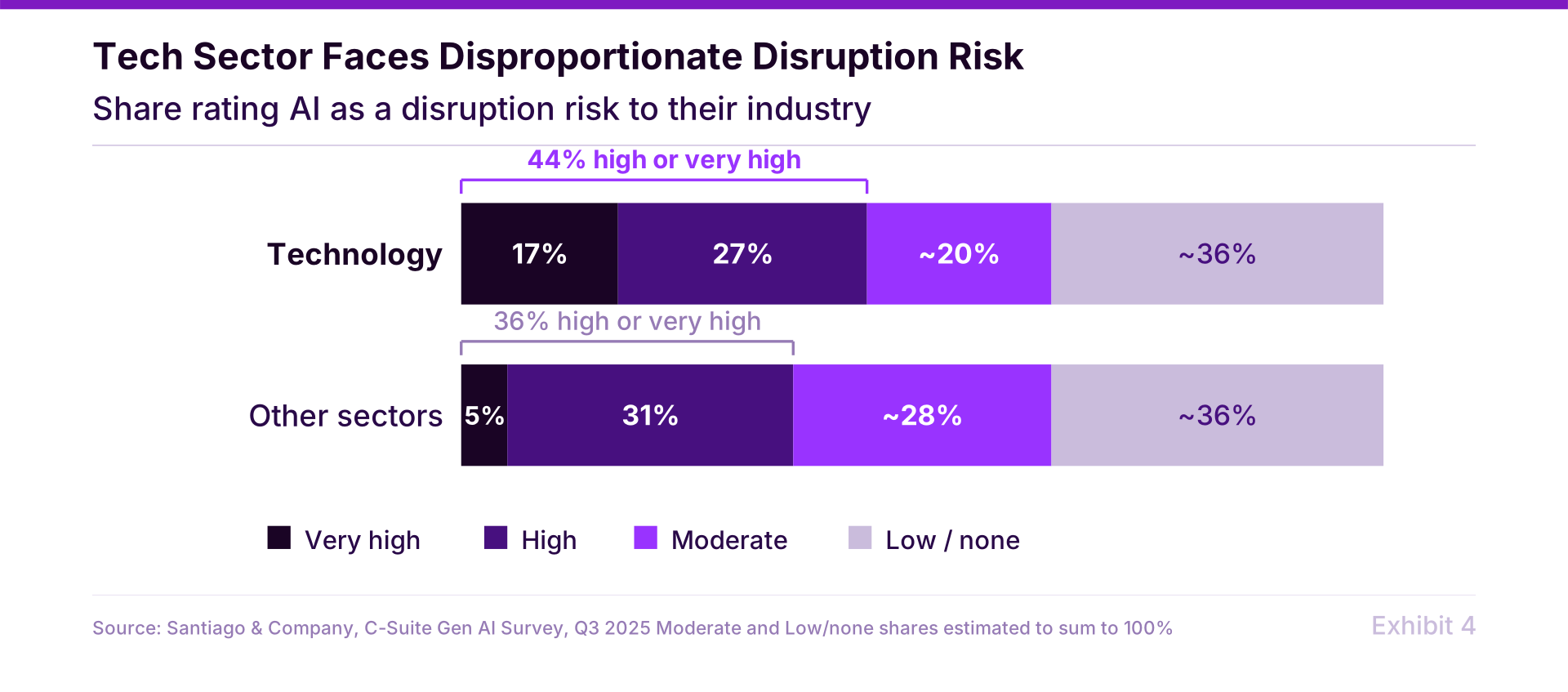
Progress at scale has a counterpart: the perception of competitive threat from AI has intensified. The share of companies rating AI as a “very high” disruption risk for their industry more than doubled between the fourth quarter of 2024 and the third quarter of 2025, precisely the period when agentic AI moved from concept to active experimentation. Technology companies feel this most acutely. About 44 percent of tech respondents see a high or very high risk of industry disruption from AI, compared with 36 percent for companies in other sectors. In the technology sector specifically, 17 percent now see the risk as very high, versus 5 percent elsewhere. Across all industries, a majority of executives see at least a moderate risk of disruption. AI is not only a tool these companies are deploying, but it is also a force reshaping the competitive environment around them.
The breadth of AI adoption has expanded faster over the past 3 years than any previous technology wave has in a comparable period. Today, 73 percent of companies report using AI in software development, up from 66 percent a year ago. Customer service, knowledge worker efficiency, marketing, and IT show similar trajectories. Even in domains where overall adoption rates remain lower, growth is rapid; the direction of travel is consistent regardless of starting point.

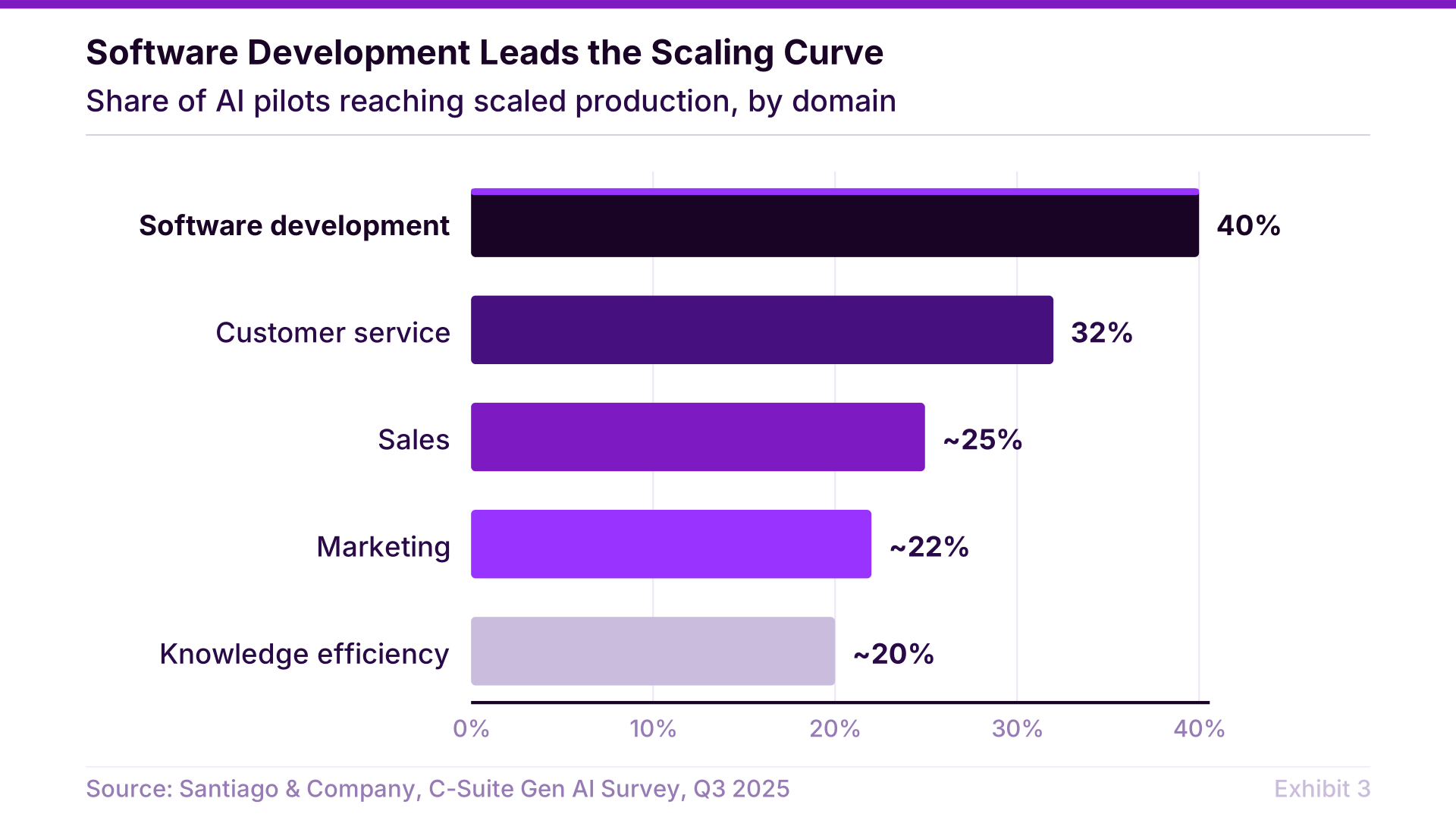
The common narrative that AI gets stuck in pilot purgatory is not borne out by the data. Across most use-case categories, the share of pilots moving to production at scale is increasing. Software development leads clearly: 40 percent of software development pilots have reached scaled production, a strong indicator of the domain’s natural fit with AI capabilities. A second tier of customer service, sales, marketing, and knowledge worker efficiency follows, with somewhere between one-fifth and one-third of use cases now operating at scale in each area.
Concerns that have historically slowed AI adoption, such as insufficient in-house expertise, doubts about quality and accuracy, uncertainty about return on investment, and incomplete data readiness, are all registering gradual declines. The exception is data security and privacy. Concern in this area has grown over the past year, particularly among companies that have already moved from pilot to production. Scaling AI means handling more data in more consequential contexts, and executives are rightly treating that as an unsolved problem.
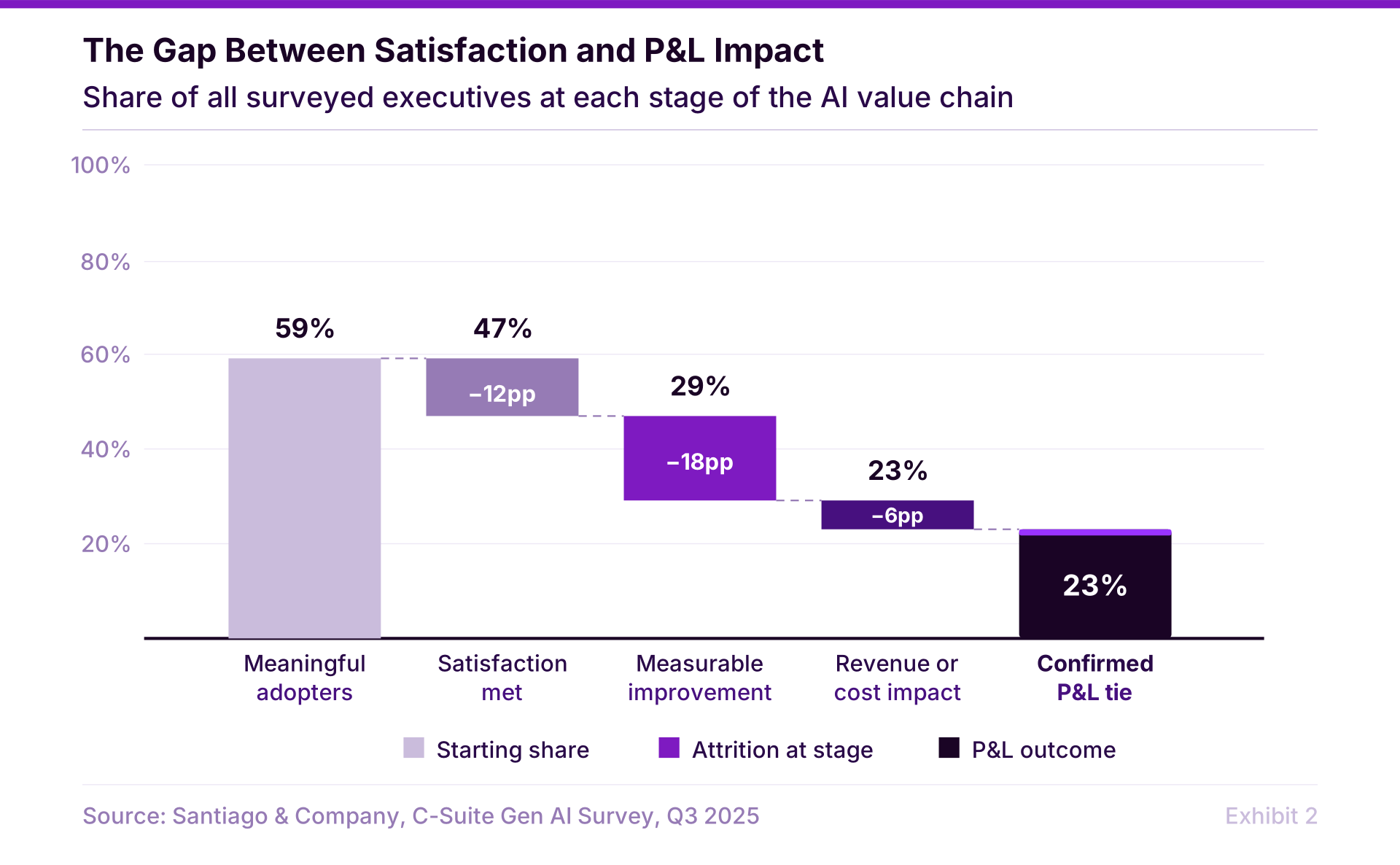
Among the 59 percent of companies meaningfully adopting generative AI, about 80 percent report that the technology met or exceeded expectations across their active domains. That is a high satisfaction rate. But the chain from satisfaction to documented financial impact is shorter than many realize. Of those who reported positive outcomes, 62 percent cited measurable business improvement or successful transformation. Of those, 78 percent saw actual revenue increases or cost reductions. Run those figures through the full respondent base, and the result is 23 percent, the share of all surveyed executives who can draw a direct line from generative AI to better financial performance. High satisfaction is encouraging; real P&L impact requires more.
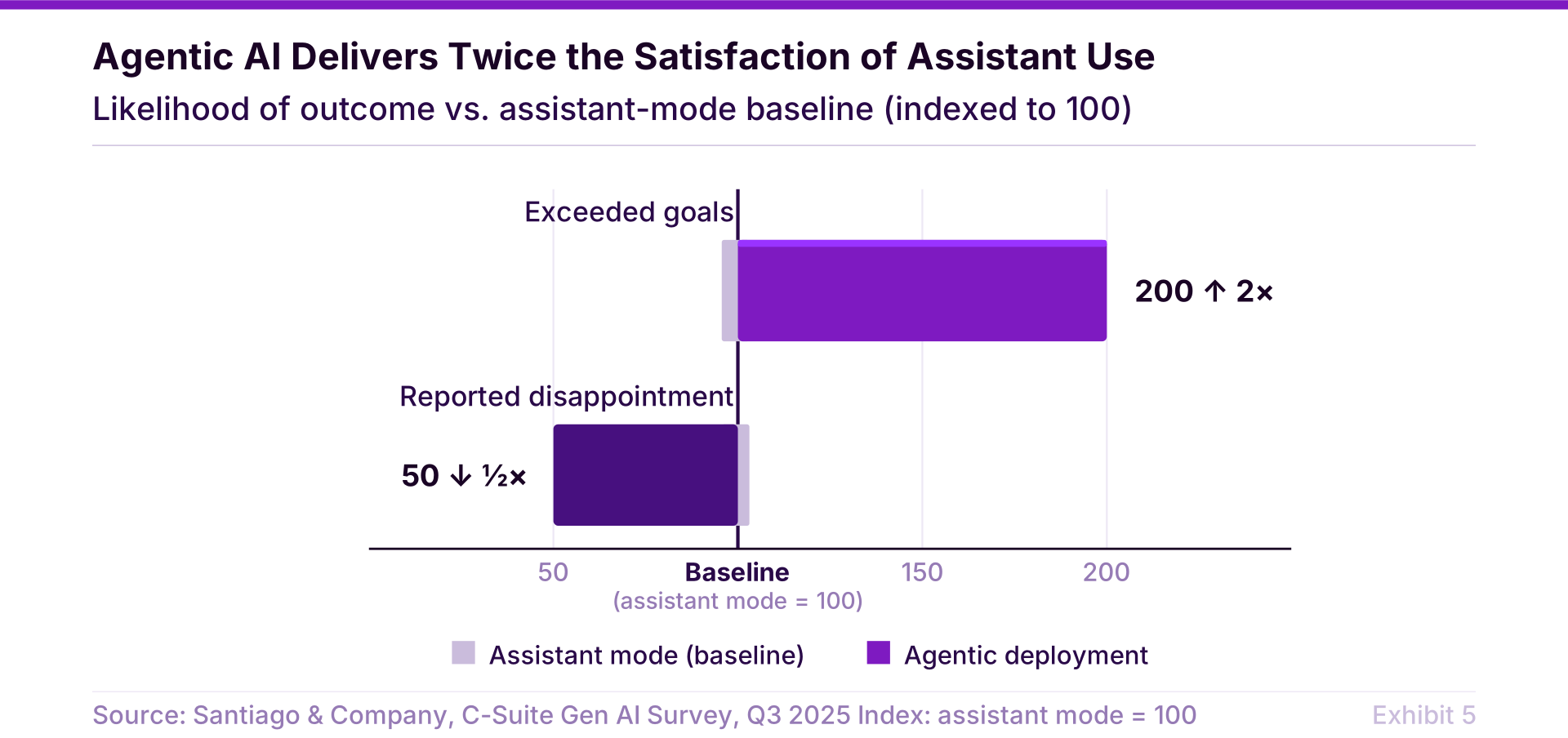
One of the survey’s more actionable findings concerns the mode of AI deployment. Executives using AI as an assistant, a tool that helps users do things faster, report meaningful but modest satisfaction. Those who have moved to assigning AI full task automation or agentic workflow management report dramatically different outcomes. They are twice as likely to say AI exceeded their goals and half as likely to report disappointment. The implication is directional: companies still operating primarily in assistant mode are leaving value on the table.
Among companies that saw AI fall short of expectations, the pattern is clear. About one-third said the technology handled some tasks but could not generalize across a workflow. An equal share found development more expensive than they had anticipated. These are solvable problems, but solving them requires realistic scoping, stronger data infrastructure, and genuine organizational commitment rather than relying solely on technology investment.
The survey, taken together, describes an industry in a credible transition. Companies are not just experimenting with AI; they are running it in production, seeing results, and increasing their commitments accordingly. The pace of adoption has no historical precedent in enterprise technology. Whether that momentum holds depends less on the technology itself and more on whether organizations can build the operating models, governance frameworks, and talent infrastructure to match it. The companies getting the most out of AI are not just deploying it; they are building the institutional capability to keep deploying it well.


Aerospace and defense companies will convert record demand into revenue only by managing qualified throughput. The scarce asset is qualified throughput, and it has to be managed node by node. The approved combination of site, process, workforce, and part at the individual production-node level.
Santiago & Company announced the public release of the AI Workforce Stability Architecture (AWSA) at the United Nations WSIS Forum 2026, introducing an open framework that helps governments monitor, prepare for, and respond to the economic and fiscal impacts of AI-driven labor displacement in service-export economies.
AI is moving on a 15-month clock; governments are moving on a five-year one. For service-export economies, the winners will not be those that forecast labor disruption most precisely, but those that pre-wire fiscal and workforce responses before the evidence becomes undeniable
SpaceX does not need to disrupt the wireless industry to reshape it. By turning satellite coverage into negotiating leverage, it is forcing carriers to rethink who owns the customer relationship when coverage comes from space.