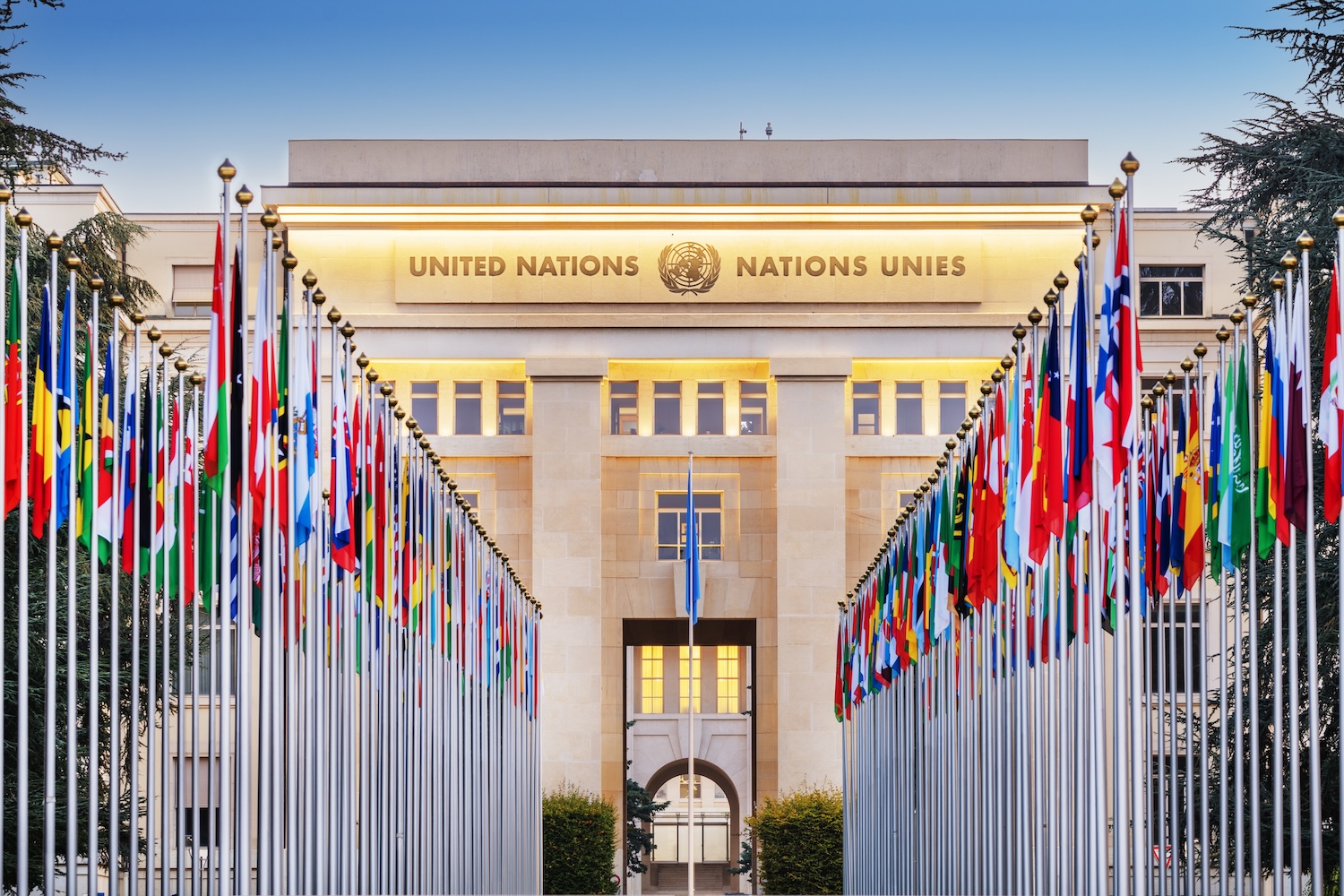
We're Presenting at WSIS Forum 2026 in Geneva - Meet Santiago & Company
Digitally delivered service exports built the formal-employment ladder for millions of educated youth in the Global South. Today, this sector drives massive economic value, for example, accounting for ~1.9 million jobs and ~$40 billion in revenue in the Philippines, and ~5.95 million tech-sector workers and roughly $315 billion (FY26) in India. While aggregate employment in these sectors continues to grow, early indicators reveal a structural shift: revenue growth is decoupling from headcount growth, and entry-level hiring intake is visibly thinning, having hit a two-decade low recently in India.
For service-export economies, this exposure is not just a labor issue, but a sovereign one. In the Philippines, the BPO sector accounts for 7.4% of GDP: a figure IMF staff analysis designates as "macro-critical". Any future displacement will transmit directly into sovereign risk via balance-of-payments, foreign exchange (FX) channels, and sub-sovereign budgets.
The core challenge for policymakers is a profound velocity mismatch. Institutional response cycles run at least two to three times—on central estimates roughly four times—slower than AI capability-deployment cycles. It took just 14–15 months from ChatGPT's launch for over 5% of all US employer businesses to report AI use, while the median national workforce or education reform takes 59 months to reach its first operational milestone. Because the AI transition lacks a focal trigger like a pandemic, waiting for undeniable labor-market deterioration means institutional responses will arrive roughly four reform-years too late.
Our session introduces the AI Workforce Stability Architecture (AWSA), a design-stage fiscal-resilience instrument currently seeking country pilots in the Philippines, India, and Vietnam. While AWSA is a new framework, it is entirely modeled on successful, pre-committed threshold instruments from adjacent fields that have proven the efficacy of pre-agreed response over ad-hoc crisis management. Relevant successful precedents shaping this framework include:
Vision for WSIS Beyond, towards the future: The recently adopted WSIS+20 outcome (A/RES/80/173, December 2025) solidifies the UN system's determination to "ensure that these developments serve to complement and augment human labour". Simultaneously, the Global Digital Compact (GDC) mandates "national assessments" of AI's labor impacts (para 21c) and is actively convening its implementation machinery, including the first Global Dialogue on AI Governance in 2026.
Our vision for WSIS beyond 2025 and towards 2035 is to transition these high-level mandates from political commitments into a runnable, quantitative architecture. Over the next decade, the primary threat to the Global South's service-export economies will be a profound "velocity mismatch": AI capability deployment currently outpaces the median institutional response cycle by roughly four times. It takes only 14–15 months for new AI capabilities to reach deep market adoption, while the median national workforce or education reform takes 59 months to hit its first operational milestone.
To survive this gap by 2035, the vision is that governments will abandon the attempt to perfectly forecast job displacement and instead rely on monitored triggers and velocity-aware sequencing. By deploying frameworks like the AI Workforce Stability Architecture (AWSA), countries will fuse exposure mapping with pre-committed fiscal-sensitivity thresholds tied to observable balance-of-payments and tax data.
Ultimately, the goal for 2035 is a paradigm shift in how sovereigns manage technological shocks: ensuring the 59-month institutional reform clock starts in "peacetime" at the first trigger breach, rather than waiting for undeniable labor-market deterioration. By pre-wiring fast-disbursement safety nets on existing rails, governments can bridge the transition years while executing the long-cycle curriculum and skills builds required to secure the next generation of formal employment.
Aerospace and defense companies will convert record demand into revenue only by managing qualified throughput. The scarce asset is qualified throughput, and it has to be managed node by node. The approved combination of site, process, workforce, and part at the individual production-node level.
Santiago & Company announced the public release of the AI Workforce Stability Architecture (AWSA) at the United Nations WSIS Forum 2026, introducing an open framework that helps governments monitor, prepare for, and respond to the economic and fiscal impacts of AI-driven labor displacement in service-export economies.
AI is moving on a 15-month clock; governments are moving on a five-year one. For service-export economies, the winners will not be those that forecast labor disruption most precisely, but those that pre-wire fiscal and workforce responses before the evidence becomes undeniable
SpaceX does not need to disrupt the wireless industry to reshape it. By turning satellite coverage into negotiating leverage, it is forcing carriers to rethink who owns the customer relationship when coverage comes from space.

